

WHAT IS CIT® HAIR TRANSPLANT?

What Is CIT® Hair Transplant? Cole Isolation Technique (CIT®) is Dr. John Cole’s namesake innovation. A vast improvement over Follicular Unit Extraction (FUE), CIT® emphasizes minimal invasiveness and accuracy. This decreases the chance of scarring and encourages natural-looking hairlines without a major impact on the FUE hair transplant cost.
CIT®, the Cole Isolation Technique, was developed specifically to address what standard FUE and automated systems leave behind: follicle damage during extraction, visible donor scarring, and a permanently depleted supply. Performed entirely by hand by Dr. Cole and his trained team, CIT® achieves a graft survival rate of 99 percent (based on Forhair’s ongoing clinical outcomes tracking). Patients in the New York area can learn about treatment availability at our NYC FUE clinic.
ENJOY THE RESULTS YOU DESERVE
Did you know that 40% of our patients request that we correct other doctors’ work?
Follicular Unit Extraction (FUE) represents a significant advancement compared to Follicular Unit Transplantation (FUT). However, the success of FUE heavily relies on the surgeon’s expertise. Inexperienced doctors often lead to overharvested donor areas, resulting in scarring, low hair yield, unnatural-looking hairlines, and thinning hair. Many clinics, lacking the proven expertise of Forhair, inadvertently cause these issues. Patients frequently come to us for corrective procedures after facing such outcomes.

- Procedure Overview
- FUT vs FUE Method
- Advanced FUE: Minimal Scarring and Scalp Recovery
- No-Shave FUE: Hair Transplant Without Shaving
- Hair Transplant Repair: Fix Botched Results, Plugs & FUT Scars
- Body Hair Transplant: Beard & Chest to Scalp FUE
- How Much Does A Hair Transplant Cost?
- Frequently Asked Questions
WHY ADVANCED FUE CIT®?
FUE is outright the better choice for those who do not want noticeable scars. FUE scars are small and round, while FUT scars will always be long and linear. Scarring is less noticeable with FUE because scars are small, if noticeable at all, and scattered throughout the scalp. Scars from FUT is are bigger and localized, making them more noticeable.
- Minimal/No Scarring - CIT® rarely leaves scars and is the only FUE method that leaves stem cells, encouraging scalp recovery.
- Better Density - Based on Forhair's internal clinical data graft-per-graft, CIT® has a success rate of 99%+.
- Donor Area Recovery - CIT® is the only hair transplant technique that enables donor areas to potentially regenerate follicles.
- Faster Healing Process - Patients recover from CIT® procedures faster than any other FUE method (based on clinical observations)..
An advanced technique, CIT® requires special training and tools. Dr. Cole personally instructs all his staff in how to properly administer the method. Proper training is essential. CIT® offers superior results but also emphasizes specialist skillsets and experience. Both are necessary to ensure a convincing hairline with uniform hair density.
“At 4 months I started to see an explosion! I am very happy with the results. I definitely recommend Dr. Cole, I don’t recommend anybody else and that’s the truth and the truth speaks for itself…just watch my videos…”

Jude Stritzinger
Codetic

THE EVOLUTION OF REGULAR FUE HAIR TRANSPLANT
One of the biggest challenges in hair transplantation is that the true quality of a result cannot be judged immediately after surgery. Hair transplant results require approximately 12 months to fully mature, making hair restoration a discipline that demands patience, long-term observation, and continual refinement of technique.
As FUE has become more popular, many physicians have entered the field with limited experience evaluating the long-term outcomes of their work. High-volume clinics often perform multiple procedures per day and may never see many of their patients one year after surgery. Without long-term follow-up, it becomes difficult for a physician to critically evaluate the strengths and weaknesses of their technique or understand how their decisions affect patients years later.
Hair restoration is not simply about moving follicles from one location to another. Every procedure should be designed with the understanding that hair loss is a progressive condition that continues over decades. A responsible surgeon must consider not only how the patient will look one year after surgery, but how the transplant will appear 10, 20, and even 30 years into the future. Donor supply is finite, and poor planning can create unnatural patterns that become increasingly obvious as native hair continues to thin.
Experience alone, however, is not enough. A surgeon must also possess the desire to continually improve and pursue a more natural aesthetic. Many clinics become complacent over time. If patients are not actively complaining, the assumption is often that the result is acceptable. Yet acceptable and exceptional are not the same thing. Raising the standard requires constantly reviewing outcomes, identifying deficiencies, and refining techniques to create results that are increasingly natural and undetectable.
This evolution has revealed many common shortcomings in modern hair transplantation. Hairlines are frequently constructed with incorrect angulation, improper direction, or multiple-hair follicular units placed directly along the leading edge of the hairline. While these mistakes may not be obvious to the average observer, they often prevent the transplant from achieving the natural appearance of native hair.
Interestingly, many patients with technically poor hair transplants report satisfaction because they simply have more hair than they had before surgery. In our experience, the majority of patients focus primarily on increased coverage and density. However, there is a smaller group of patients with a highly discerning eye for detail who become intensely dissatisfied when unnatural characteristics become apparent. For these individuals, improper hairline design, unnatural graft placement, or poor angulation can have a profound psychological impact despite an overall increase in hair volume.
The evolution of FUE has therefore been driven not only by improvements in extraction technology but by a deeper understanding of aesthetics, long-term planning, and the importance of creating results that remain natural throughout a patient’s lifetime. The goal should never be simply to grow hair—it should be to create a result that is indistinguishable from nature itself.
HAIR TRANSPLANT RESULTS

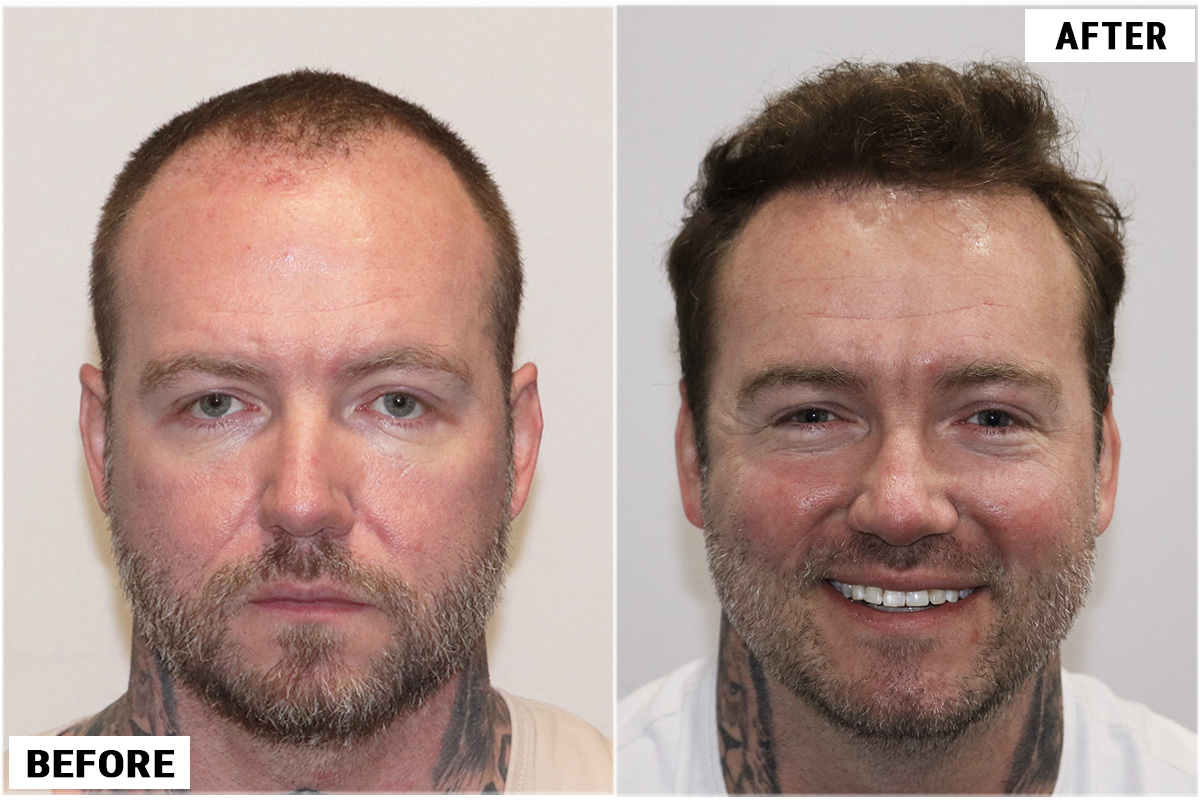
Hair Transplant 1661 grafts FUE
This patient received 1,661 FUE grafts to restore his frontal hairline, along Read More
CIT® AND HAIR REGENERATION TREATMENTS
The unique strengths of CIT® make it perfect for hair regeneration treatments. These groundbreaking formulas deliver successive boosts of growth factors that generate stem cells. In turn, this hastens growth while improving scalp health and hair density. Forhair continues researching ReyaGel®, Platelet Rich Plasma, and other treatments to better improve patients’ results.
REYAGEL - ECM TECHNOLOGY
- improve donor site healing,
- reduce hypopigmentation,
- and support hair growth.
CIT® VS. ARTAS VS. NEOGRAFT
CIT® delivers the best results available today. As Dr. Cole was perfecting CIT®, though, other advancements in FUE became available. Two advancements, in particular, receive a lot of marketing.
- Neograft - A device that automates extraction through air suction. NeoGraft is frequently marketed to plastic surgeons as a straightforward add-on procedure, with the manufacturer's team available to perform the procedure on the physician's behalf. While physician oversight is part of the model, the varying levels of team training and experience can lead to inconsistent results, and surgeons who take on the procedure without developing hands-on FUE expertise may find their outcomes, and their reputation, falling short of expectations.
- ARTAS - A robotic, image-guided system that automates much of the FUE process. ARTAS is physician-supervised, with trained technicians assisting in graft handling. However, published studies show mixed results regarding transection rates, and some clinics operate on a per-extraction billing model, meaning patients may still be charged for grafts that do not survive the process. As with any technology-assisted approach, outcomes can vary significantly depending on the experience of the team operating it.
Each system lacks the unique benefits of CIT® while also having major pitfalls. Look at the table below to better compare these new FUE techniques.
CIT® Vs. ARTAS Vs. Neograft Comparison
Features
- Scarring
- Hairline
- Graft success rate
- No-shave option
- Placement accuracy
- Procedure duration
- Patient viability
- Surgeon experience
- Surgeon activity
- Recovery time
- Minimal growth time
- Cost
- Special considerations
ARTAS
- “Moth eaten” scarring
- Depends on operator
- 70%-90%*
- Selective trimming
- Depends on operator
- Four to eight hours
- Dark, straight hair
- ARTAS training
- Depends on the clinic
- Generic
- One year
- $7 to $15 per graft
- Manual hairline
Neograft
- Depends on operator
- Depends on operator
- Depends on operator
- Depends on operator
- Depends on operator
- Depends on operator
- Everyone
- Depends on the clinic
- Depends on the clinic
- Generic
- One year
- $7 to $10 per graft
- Adverse to follicles
CIT® (Cole FUE)
- Minimal
- Unique
- Generally 99%
- Yes, C2G
- Always accurate
- Comparable to FUT
- Everyone
- 20+ years
- Always hands-on
- Generic
- 99% in 4 1/2 months
- Case-by-case
- Donor regeneration
*Wang F, Chen Y, Yang C, Li C, Zhang H, He J, Li M, Lei T, Lei H, Liu B, Zhang W. Using the follicular unit extraction technique in treatment of male androgenetic alopecia. BMC Surg. 2024 Nov 15;24(1):358. doi: 10.1186/s12893-024-02655-1. PMID: 39543552; PMCID: PMC11566358.
ARTAS and Neograft both heavily market to patients, leading many to assume that these brands offer superior results.
However, both Neograft and ARTAS have their detractions as well. Neograft’s system can be too intense for follicular health while ARTAS leaves visible scars and has a higher transection rate than truly experienced FUE surgeons and technicians.

Specialists who use these devices rarely, if ever, develop the skills of an experienced FUE hair transplant surgeon. Neograft is particularly notorious for minimally training its own technicians who then fly to different clinics on an appointment-by-appointment basis. Meanwhile, ARTAS technicians and surgeons must undergo significant training as well as pay a $1 per hair graft royalty, leading to a higher FUE hair transplant cost.
CIT®, on the other hand, emphasizes the surgical team’s experience and skill. Forhair exclusively uses Cole Instruments, the sharpest punches in the world, to ensure quality fue hair grafts each and every time. Emphasis on true minimal invasiveness also offers a unique benefit we already cover: donor regeneration. Forhair, a case by case, proves itself to offer superior artistry and superior methods for truly impressive results.
Reasons to choose CIT®
- CIT® is less invasive
- Does not leave a tell-tale linear scar
- Faster and less painful recovery
- Low transection rate of under 3%
- Natural hairlines and optimal aesthetic results
- Superior FUE hair transplant cost
- Maximal graft survival
- Maximizes donor hair for harvesting
- Allows physicians to “cherry-pick” grafts that will result in an optimal yield
- CIT® transplanted hair is virtually undetectable
- Can be performed even when the scalp is too tight for a strip procedure
- C2G®, or CIT® to Go, is a non-shaven version of CIT® -no need to shave your head!
What to Expect on the Day of Your CIT® Procedure
A standard CIT® procedure at Forhair follows this general sequence:
8:00 AM - Patient Check-In and Data Collection
You arrive at the clinic and complete the intake process. Essential data is collected to prepare for your procedure and ensure everything is documented before the consultation begins.
9:00 AM - Hairline Design and Consultation
Dr. Cole meets with you to finalize the hairline design. This is a collaborative, artistic process. No extraction begins until both physician and patient are fully aligned on the aesthetic outcome.
10:00 AM – Local Anesthesia and Extraction Begins
The donor area is prepared and anesthetized. Dr. Cole’s trained team begins extracting individual follicular units using Cole Instruments.
11:00 AM – Implantation Phase Begins
As extraction continues, the placement phase begins in parallel. Follicles are implanted into the recipient area with precision, following the natural direction and angle of your existing hair. This phase is critical to achieving a natural-looking final result.
12:00 PM – Lunch Break
A midday break is taken for the patient to rest and recharge before the afternoon implantation phase continues.
5:00–6:00 PM – Post-Operative Instructions and Follow-Up Scheduling
Before leaving, you receive detailed aftercare instructions and schedule your follow-up appointment, setting you up for a smooth recovery.
FUE Questions and Answers
Do FUE Hair Transplants Work?
An FUE hair transplant is considered the gold standard in hair restoration surgery. The transplanted hair from the donor to the recipient area will grow and thrive.
Is a FUE Hair Transplant Painful?
An FUE hair transplant surgery should not be painful during the procedure. However, mild tenderness should be expected after the procedure. Discomfort should subside in a few days and can be managed with over the counter pain killers.
Is It True That FUE Grafts Have a Poor Survival Rate?
The survival rate has many variables, such as the quality and type of hair, though if instructions are followed, the minimal survival rate is 99% of the grafts.
Why Is CIT® Better Than Neograft?
The air pressure used in Neograft’s extraction process can damage the lower portion of the follicle, reducing graft viability. Additionally, many Neograft procedures are performed by traveling technicians with limited training, not by experienced surgeons.
CIT® is always performed by Dr. Cole and his personally trained team. Every graft is extracted by hand using precision instruments designed by Dr. Cole himself. The transection rate for CIT® is under 3 percent. Neograft transection rates vary by operator and have been reported at significantly higher levels in the literature (Avram, Watkins, 2014)
We often repair damage from automated devices.
Does CIT® Leave Scars?
CIT® is specifically designed to minimize scarring. The punch instruments used are calibrated for minimal depth, which means extraction wounds are small, heal quickly, and do not produce the linear scar associated with FUT (strip) procedures.
For most patients, any evidence of extraction in the donor area is undetectable once the hair grows back in. This is one reason CIT® is the preferred technique for patients who wear their hair very short.
Can I Wear My Hair Short After a CIT® Procedure?
Yes. Because CIT® does not produce a linear scar and leaves only small, scattered extraction points in the donor area, patients can wear their hair at a short length without visible evidence of surgery.
What Is the Transection Rate of CIT®?
Transection refers to the accidental severing of a follicular unit during extraction, which renders it unusable. CIT® achieves a transection rate of under 3 percent. By comparison, industry averages for standard FUE range from 5 to 15 percent, depending on surgeon experience, while robotic systems report transection rates of 0.4%–32.1%.
Is CIT® More Expensive Than Robotic FUE?
The cost of CIT® is assessed on a case-by-case basis. In some comparisons, the per-graft cost of ARTAS-based procedures is higher, partly because clinics using that system pay a royalty fee per graft to the manufacturer, a cost that is passed to the patient. CIT® pricing reflects the time and expertise of a highly trained surgical team, not a machine licensing model.
* Wang F, Chen Y, Yang C, Li C, Zhang H, He J, Li M, Lei T, Lei H, Liu B, Zhang W. Using the follicular unit extraction technique in treatment of male androgenetic alopecia. BMC Surg. 2024 Nov 15;24(1):358. doi: 10.1186/s12893-024-02655-1. PMID: 39543552; PMCID: PMC11566358.