

Body Hair Transplantation: An Option if Donor Sites Are Too Sparse for CIT®
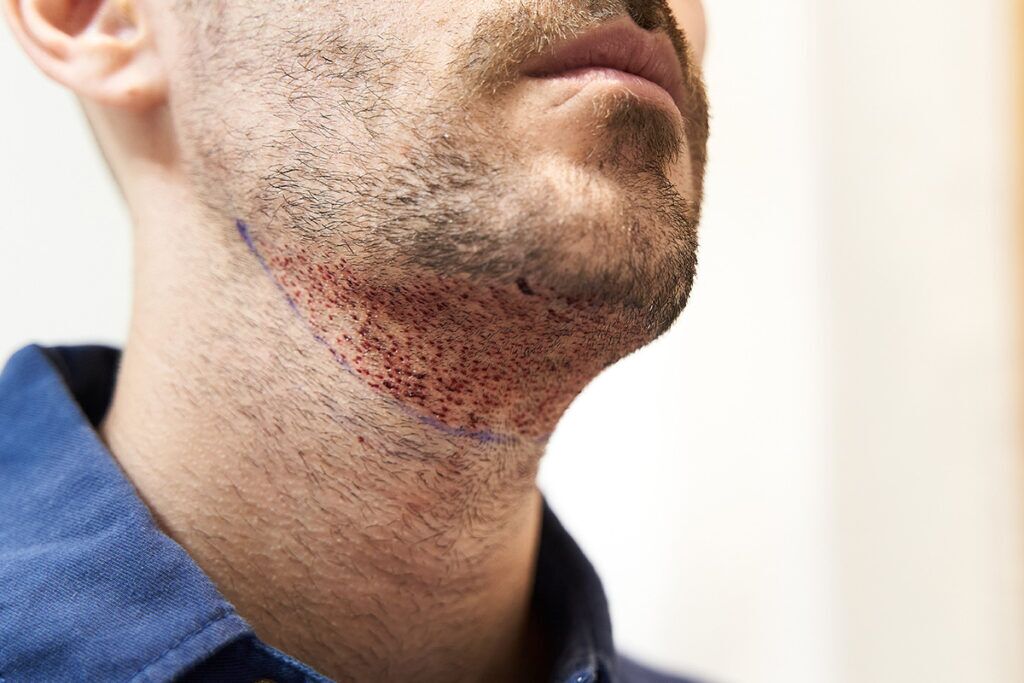
Body Hair Transplantation (BHT) is a unique procedure that combines body and scalp hair grafts. The technique is best for patients whose donor sites lack a viable number of follicles for CIT®. Like FUE, BHT began gaining recognition in the early 2000s and remains a specialized field practiced by only a handful of physicians worldwide. Pricing is often comparable to standard FUE, reflecting the additional skill and procedure time required. Advances in the technique continue to improve outcomes, though success rates remain lower than those achieved with CIT®.
Body hair for hair transplant should be a last resort. However, we fully understand that BHT may be some patients’ only option for hair restoration surgery. In fact, Forhair technicians excel at the technique and continue introducing new advancements as they develop.
- Procedure Overview
- FUT vs FUE Method
- Advanced FUE: Minimal Scarring and Scalp Recovery
- No-Shave FUE: Hair Transplant Without Shaving
- Hair Transplant Repair: Fix Botched Results, Plugs & FUT Scars
- Body Hair Transplant: Beard & Chest to Scalp FUE
- How Much Does A Hair Transplant Cost?
- Frequently Asked Questions
How Body Hair Transplant works?
Body hair transplants employ the advanced FUE (Follicular Unit Extraction) technique to address hair restoration needs. This method involves carefully extracting individual hair follicles from body areas with dense hair, such as the chest, back, or beard, and transplanting them to the scalp. The process is meticulously performed to ensure precision and minimal scarring, providing a natural look and feel.
We Conduct a Test Case Before Committing to Your Procedure
Test sessions are recommended primarily when harvesting hair from below the collarbone — such as the chest, back, abdomen, or legs. These donor sources are far less predictable than scalp or beard hair, and in our experience, they produce excellent results in only about one out of four patients. The primary issue is circulation. Hair follicles from these areas are not genetically programmed to grow long hair and often struggle to adapt when transplanted to the scalp.
Circulation does not determine graft yield. While they do grow at lower densities than the scalp. We like to map the same density that they naturally grow at to ensure a good yield. If successful, we can increase the density once the grafts grow in.

Donor Site Comparison: Beard, Chest, and Beyond
Not all body hair is created equal. The location from which follicles are harvested has a direct impact on texture, yield, and how naturally the transplanted hair blends with existing scalp hair.
The following data summarizes what current clinical experience and research literature indicate about the most commonly used donor regions.

Beard (Most Common)
Distribution in BHT cases is roughly 73%[2], with a graft yield of approximately 90% [2]. Beard hair is coarser than chest, back, or leg hair, allowing a smaller number of grafts to create a greater cosmetic impact. It is by far the most dependable secondary donor source after scalp hair.
Chest
Makes up about 13% of typical cases[2, 3]. Chest hair is finer than scalp or beard hair and does not cover as well. Yield is unpredictable and varies significantly by patient; a test session is recommended before committing to a larger procedure.
Back / Stomach
Accounts for roughly 5% of procedures[3]. Like chest hair, back and abdominal hair is fine and carries unpredictable yield. A test session is strongly advised.
Legs / Arms
Represents a smaller portion at roughly ~2% of cases [2]. Leg and arm hair is among the finest and least predictable of all donor sources, with yield varying widely by patient [2].
Pubic / Armpit
Use of these donor areas is rare in BHT procedures. Pubic hair is notably coarser, which can be advantageous in select cases, though harvesting from this region presents unique challenges. Yield is variable depending on the individual patient.
Yield figures are estimates based on available clinical literature and may vary significantly depending on individual patient characteristics, extraction technique, and follicle health. [1, 2, 3]
BHT Requires the Right Blend and Density
Results differ by donor region. Beard hair, for example, behaves differently than chest or thigh hair. Properly combined with scalp grafts, however, body grafts become hardly noticeable. Counterintuitively, lower densities of hair transplants lead to better results. We do our utmost to place as many follicles together as is feasible for the patient.
As with everything hair restoration, we emphasize the best BHT results possible. Even more important, our BHT transplants demonstrate convincing blends that appear natural. At Forhair, we know that each BHT case is different; one major reason we tailor our approach patient-to-patient.
The key to BHT is interspersing hair and body follicles for convincing results. Scalp follicles often consist of the hairline and then, going back, blend with body hair grafts. This is because body hair transplant is noticeably coarser.
Understanding Hair Characteristics: Body Hair vs. Scalp Hair
Body hair and scalp hair differ in several important biological ways that directly affect transplant outcomes. Understanding these differences helps set realistic expectations.
Scalp Hair
- Anagen phase
2 to 6 years
- Texture and caliber
Moderate to coarse
- Growth angle
Emerges at a natural scalp angle
- Curl pattern
Varies by patient
- Graft Yield
Approaching 99% when harvested and transplanted properly
Beard Hair
- Anagen phase
Long — comparable to scalp hair. Consider how long you can grow your beard; that reflects the beard's anagen cycle.
- Texture and caliber
Coarser than scalp hair in many cases, making it particularly effective for coverage in the mid-scalp and crown
- Growth angle
Emerges at a more acute angle from the dermis
- Graft Yield
Approximately 90%
Chest / Back / Abdominal / Leg Hair
- Anagen phase
Shorter than both scalp and beard hair
- Texture and caliber
Generally finer and softer than scalp hair; does not cover as well
- Growth angle
Emerges at a more acute angle from the dermis
- Curl pattern
May curl after transplant, differing from natural scalp growth direction
- Graft Yield
Highly unpredictable; works well in approximately 1 out of 4 patients
Pubic Hair
- Anagen phase
Shorter than scalp and beard hair
- Texture and caliber
Coarser than chest, back, or leg hair — more comparable to beard hair, which can be advantageous for coverage in select cases
- Graft Yield
Variable depending on the individual patient
Main Clinical Outcomes
-
Hair Growth
Transplanted body hair will generally grow shorter than native scalp hair [4]
-
Donor Area
Beard is the preferred donor source in the majority of BHT cases
-
Coverage
Chest, back, and leg hair is finer than scalp hair and covers less effectively
-
Technique
Careful placement technique is required to minimize directional mismatch
-
Strategic
Strategic placement toward the crown reduces visible curl effect
Recovery Timeline
Recovery following a BHT procedure follows a predictable progression, though donor sites heal at different rates depending on the area harvested.
Days 1 to 3
Mild swelling and redness are expected at both the recipient (scalp) and donor (body) sites. This is a normal inflammatory response and typically resolves quickly.
Week 1
Small scabs form around transplanted follicles. These shed naturally and should not be picked or disturbed. Scabbing typically resolves within 7 to 10 days in the recipient area and 2-5 days in the donor area. [6]
2 to 4 Weeks
Transplanted hairs will shed during this phase. This is a normal and expected part of the process — the follicles themselves remain intact beneath the skin and are simply entering a resting phase before new growth begins. This shedding is distinct from shock loss, which refers specifically to the temporary loss of pre-existing native hair in the recipient area, typically caused by placing grafts at too high a density.
Months 3 to 6
New hair growth becomes visible as follicles transition into the active growth phase. Fine, initially colorless hairs gradually thicken and darken over this period. [6]
Month 12
Final results are typically assessable at the one-year mark, though some patients, particularly those with coarser hair or larger graft counts, may see continued improvement up to 15 to 18 months post-procedure. [6]
Donor site healing by location
Beard
The beard is one of the best healing areas of the body for hair extraction. It has an excellent blood supply and generally heals better than both the chest and the traditional scalp donor area. The small scabs created during extraction can begin to heal as early as 48 hours after the procedure, with most patients seeing visible scabbing for approximately 4 to 5 days.
Once scabs have shed, the donor area typically resembles mild razor burn rather than a surgical site. Some pinkness may remain for 2 to 4 weeks, gradually fading and easily concealed by surrounding beard hair. Patient complaints regarding visible scarring from beard extraction are extremely uncommon.
Beard extraction also offers an additional cosmetic benefit: the healing process causes a mild degree of skin contraction, which can create a subtle neck-tightening effect similar to a minor neck lift.
Chest and Back
Chest and back donor sites have less circulation than the beard, and there is approximately a 50% chance of developing noticeable scarring following extraction. For this reason, we recommend a test session before committing to a larger body hair procedure. During the test session, grafts are harvested in a widely distributed pattern so that surrounding hair can help conceal any extraction sites, allowing us to evaluate both healing characteristics and graft yield before proceeding further.
If noticeable scarring develops or if the cosmetic tradeoff is not favorable, we can avoid further chest or back extraction altogether. For patients where scarring is a concern, the addition of Reyagel is worth considering. Reyagel has been shown to improve wound healing, reduce visible scarring, and promote tissue regeneration — making it particularly beneficial for body hair procedures where healing can be less predictable.
Patients with darker skin tones should discuss the risk of temporary hypopigmentation at extraction sites with their physician prior to treatment.
Who Is a Candidate for Body Hair Transplant?
BHT is not appropriate for every patient. A careful evaluation is required to determine whether you are likely to benefit from the procedure.
Ideal candidates typically include:
- Patients classified as Norwood Scale 5 to 7 with a significantly depleted scalp donor area
- Individuals who have undergone previous hair transplant procedures and need additional grafts
- Hair transplant repair patients seeking correction of prior work, including FUT linear scar repair
- Patients with an abundant supply of body hair, which is more commonly seen in those of Mediterranean descent
Poor candidates typically include:
- Patients with naturally sparse body hair, which is more frequently observed in individuals of Asian descent
- Those with unrealistic expectations regarding texture match, yield, or density
- Patients seeking hairline-only work, where scalp donor hair remains the preferred source
If you are uncertain whether you qualify, a specialist consultation at Forhair will help clarify your options.
Risks and Limitations
Transparency is central to the Forhair approach. BHT is a valuable option for the right patient, but it carries specific risks and limitations that should be understood before proceeding.
Potential risks include:
- Hypopigmentation at beard extraction sites, particularly in patients with darker skin tones [1]
- Potential for keloid formation; patients with a history of keloid scarring should avoid extraction from the sternal (chest) area [7]
- Folliculitis is a pre-existing condition that affects candidacy for surgery — patients with active folliculitis are not suitable candidates for BHT or any hair transplant procedure [1]
- Texture mismatch between body and scalp hair, which may be visible at certain hair lengths [2]
- Lower graft yield compared to scalp FUE, particularly from non-beard donor sites [3]
- Longer procedure time due to harvesting from multiple anatomical locations [3]
While these risks exist, they can often be managed or mitigated through proper patient selection and technique. Have a thorough pre-operative consultation and to choose a physician with demonstrated BHT experience.
BODY HAIR TRANSPLANT RESULTS
We also apply hair restoration treatments like ReyaGel and Cytokine Rich Plasma (CRP), our exclusive, all-natural blood-based serum with five to eight times the concentration of Platelet Rich Plasma. Both treatments may stimulate hair growth and support scalp recovery.
When CIT® is combined with ReyaGel, scalp donor site preservation is associated with an average regeneration of 30% to 40% of donor follicles — an estimated 300 to 400 new follicles for every 1,000 single extractions. This regeneration is made possible by ReyaGel and applies specifically to scalp donor sites. For body hair donor areas, some degree of regeneration may also occur, though the rate is lower than scalp hair and has not yet been formally established.
When beard hair is used as the primary donor source, BHT graft yield typically reaches approximately 90%. Yield from other donor sites, such as the chest or legs, is unpredictable and varies significantly by patient.[2, 3]
What can I say more?
Results are very natural, I had a very light and no problematical post-op, hair and body hair (BHT) are still growing. I’m completely satisfied. That’s all.
-Patient Testimonial


PATIENT "MBR" BODY HAIR RESULTS
Patient “MBR” reviewed 5000 body hair grafts in a span of 8 days, click on the link for more.
Body Hair Questions and Answers
Is body hair transplant safe?
Body hair transplant is a well-established alternative for patients who are not suitable candidates for scalp-only FUE. As with any surgical procedure, outcomes depend on patient selection, donor site characteristics, and physician experience. Graft yields vary by donor location, body hair characteristics differ from scalp hair, and the procedure typically requires more time than traditional FUE. A thorough consultation is essential to determine whether BHT is appropriate for your individual situation.
Is body hair transplant painful?
Most patients report minimal discomfort during the procedure, which is performed under local anesthesia. The recovery period after a body hair transplant may involve minor pain, which can be managed with over-the-counter pain relievers.
How many grafts can you get from body hair?
The total number of grafts available varies from patient to patient. For example, a patient of Asian descent will tend to have significantly less body hair than someone of Mediterranean descent. Patients with an average amount of body hair may have up to approximately 10,000 follicular units available, though the precise number depends on individual assessment by your physician.
Does removing body hair leave scarring?
Any extraction procedure will leave some degree of scarring at the donor site. The beard area heals exceptionally well due to its strong blood supply, and visible scarring from beard extraction is uncommon. Chest and back donor sites carry a higher risk — approximately a 50% chance of noticeable scarring — which is one reason we recommend a test session before committing to larger procedures in these areas. Your physician will discuss what to expect from your specific donor sites during your consultation.
How successful is a body hair transplant?
Success varies significantly depending on the donor source. Scalp hair remains the gold standard, with graft survival rates approaching 99% (Forhair’s clinical observations). Beard hair is the most reliable secondary source, achieving approximately 90% graft yield. Hair harvested from below the collarbone — chest, back, abdomen, and legs — is far less predictable and works well in only about one out of four patients. Test sessions are strongly recommended for these donor areas before committing to a larger procedure. Test sessions for areas that tend to yield poor growth are recommended to confirm candidacy.
What part of the body can be used for body hair transplant?
Virtually any area of body hair can be considered for a body hair transplant. Though different parts of the body have different types of hair characteristics. Beard hair is the most reliable and is coarser in caliber, making it effective for coverage. Chest and back hair are finer and less predictable. Pubic hair is coarser and may be suitable in select cases. Certain locations, like the armpits and the pubic region, tend to be more difficult to harvest from than the chest and beard.
Will body hair look natural on my scalp?
With proper technique, BHT results can look convincingly natural. The key is blending. At Forhair, we reserve scalp grafts for the hairline and intersperse body hair grafts toward the mid-scalp and crown, where texture differences are least noticeable. Beard hair tends to blend most naturally due to its closer resemblance to scalp hair in caliber.
Who is a good candidate for body hair transplant?
The ideal candidate is a patient with advanced hair loss (Norwood 5 to 7) whose scalp donor area has been significantly depleted, either naturally or following previous procedures. Patients with abundant body hair, more commonly seen in those of Mediterranean descent, tend to respond best. Those with naturally sparse body hair, including many individuals of Asian descent, may not have sufficient donor follicles for a meaningful result.
How long does body hair take to grow after transplant?
Can body hair be used for the hairline?
Chest, back, and abdominal hair can be used at the hairline in select cases, though careful consideration is required, given their finer texture and tendency to curl. Beard hair is generally the preferred body donor source for hairline work when scalp hair is unavailable, due to its coarser caliber and more predictable behavior.
When scalp donor hair is still available, it is typically reserved for the hairline. Beard hair may be considered for hairline use in select cases at the physician’s discretion.
Bibliography
- Gupta J, Chouhan K, Kumar A, Chandrasegaran A. A Comparative Study on the Rate of Anagen Effluvium and Survival Rates of Scalp, Beard, and Chest Hair in Hair Restoration Procedure of Scalp. J Cutan Aesthet Surg. 2019 Apr-Jun;12(2):118-123. doi: 10.4103/JCAS.JCAS_49_18. PMID: 31413480; PMCID: PMC6676805.
- Umar S. Use of body hair and beard hair as donor sources in hair transplant surgery. JAMA Facial Plastic Surgery. 2011;13(6):424-427. doi:10.1001/archfacial.2011.100
- Umar S. Body hair transplantation using follicular unit extraction: Long-term outcomes and a review of current techniques. Journal of Clinical and Aesthetic Dermatology. 2016;9(7):15-22. Available at: https://pubmed.ncbi.nlm.nih.gov/27241361/
- Buffoli B, Rinaldi F, Labanca M, et al. The human hair: From anatomy to physiology. International Journal of Dermatology. 2014;53(3):331-341. doi:10.1111/ijd.12362
- Mysore V, Nandini A. Hair transplantation: Standard guidelines of care. Indian Journal of Dermatology, Venereology and Leprology. 2008;74(Suppl):S46-53. doi:10.4103/0378-6323.43751
- Bernstein RM, Rassman WR. Follicular unit transplantation: 2005. Dermatologic Clinics. 2005;23(3):393-414. DOI: 10.1016/j.det.2005.04.002
- Ogawa R. Keloid and hypertrophic scars are the result of chronic inflammation in the reticular dermis. International Journal of Molecular Sciences. 2017;18(3):606. doi:10.3390/ijms18030606
- Loh SH, Lew BL, Sim WY. Localized Telogen Effluvium Following Hair Transplantation. Ann Dermatol. 2018 Apr;30(2):214-217. doi: 10.5021/ad.2018.30.2.214. Epub 2018 Feb 21. PMID: 29606820; PMCID: PMC5839894.