


Dr. Insalaco’s stem cell research is changing how people view hair restoration
Chiara Insalaco is helping to change how cosmetic surgeons address hair loss. Boasting an M.D. and residency from the University of Rome, Sapienza, she is currently pursuing her PhD in Applied Medical Surgical Sciences at University Tor Vergata. One of her major focuses? Stem cell therapy for hair restoration. Dr. Insalaco is currently a pivotal member of a cutting-edge research project jointly helmed by the Forhair Clinic of Atlanta and Artemisia Lab. They hope to introduce new, groundbreaking hair loss methods worldwide.’
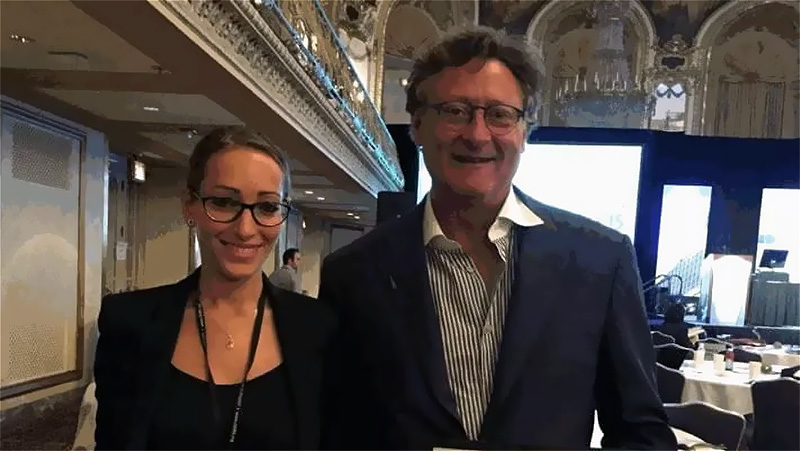
Can you tell us about working internationally?
It started two years ago with a research project in the field of regenerative medicine. Put simply, we began looking for viable hair loss treatments that use stem cells. The project continues at the Forhair Clinic in Atlanta with Dr. John P. Cole, a luminary in the field. Research in the United States has less economic or bureaucratic impediments, allowing us to faster identify solutions and pitfalls.
Stem cells for baldness?
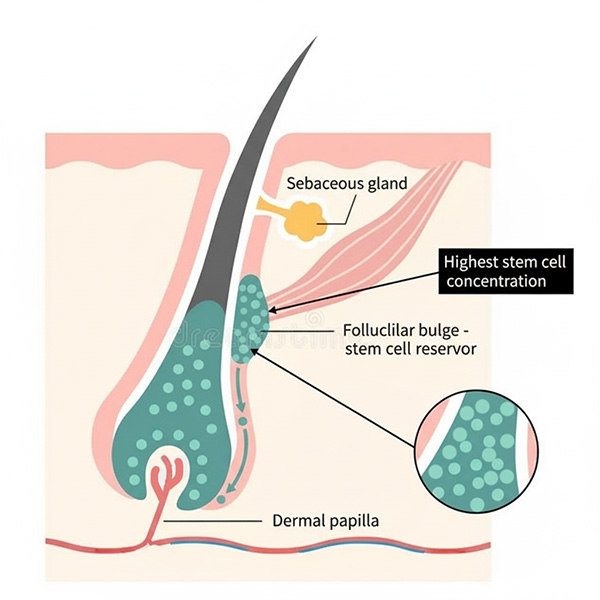
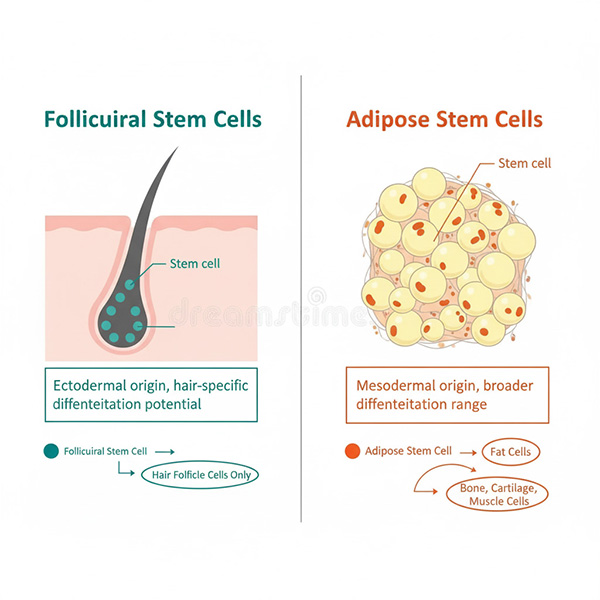
We are the first team to examine the practicality of follicular stem cells for hair regrowth. Researchers, until now, were not coordinating nor differentiating between stem cells variants. Resultantly, most were defaulting to adipose, or fat, stem cells. Follicular and adipose stem cells, though, have different embryonic origins. We are currently working to further pinpoint the best area from which to extract follicular stem cells. The follicular bulb is a major area of focus because it has the greatest concentration of follicular stem cells. Our current technique isolates and processes these stem cells with a machine from an Italian company.
What are the advantages?
Our current serum helps encourage regrowth. Patients’ results are far better than generic platelet rich plasma (PRP) treatments. The effect of our team’s stem cell serums also remains over time. There is no risk of rejection or infection and patients experience little to no pain. We are still in a phase of experimentation and data collection, but it’s already evident that this therapy is a radical improvement over current treatments.
What about timing and costs?
Patients see obvious results from 3 to 6 months to a year. We currently charge around $1,800. This is a major improvement over transplants, which often cost around $8,500. Just remember that our treatment is only available at authorized facilities.
You talk about diseases, but for the Italian law it’s about aesthetics …
Italian hospitals do not consider baldness a disease. However, it functions as such and the U.S. recognizes this fact. People can go bald for numerous reasons but alopecia, an autoimmune reaction, is the most common. Think of it as a thyroid disease. Put simply, most instances of hair loss have a pathology that coalign with other autoimmune diseases and effective treatments must be acknowledged. This is without detailing the devastating social and psychological impact hair loss can have on someone, female or male.
What’s your message?
Science indicates that most hair loss is pathological. Research and treatment should focus on origins rather than aesthetics. Such a mentality will lead to more effective results. The current attitude discourages innovation and curtails research. Patients should seek surgeons who specialize in hair restoration before those who specialize in generic cosmetics. Due to misinformation, though, many Italians are engaging in medical tourism. Turkey is a generic example of a place people visit due to advertising that boasts all-inclusive packages: air flight, hotel, sightseeing, and hair transplantation.”
Please add more detail…
Doctors who sell these hair transplant packages are behaving like crooks. They look at the patient in passing and delegate the medical-surgical work to assistants who lack training, education, or experience. They only care about turnaround and are fully aware their false advertising and surgical practices are illegal.
Dangerous as well as illegal …
Subpar “transplants” can be devastating. Those undergoing them often deal with surgical complications, infections, and awful aesthetics. Patients must then turn to more reputable clinics, often with little chance of resolution. The International Society of Hair Restoration Surgery and Italy’s Trichology Society are taking action against any and all surgeons who offend the medical profession and violate the dignity of their patients.
This article part above was originally released by the Italian magazine: lastampa.it
ForHair’s Current Approach to Follicular Stem Cell Therapy
Our Protocol and Processing Methods
At ForHair, we’ve refined the follicular stem cell extraction protocol since this 2018 research collaboration.
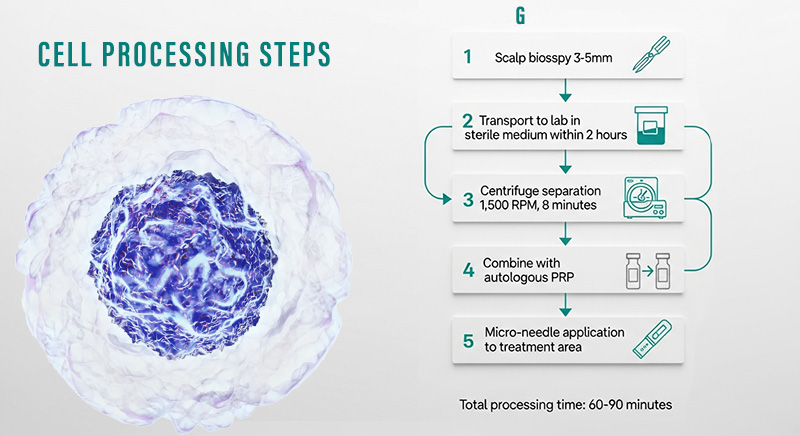
The process begins with a small punch biopsy from the occipital scalp, typically 3-5mm in diameter, where follicular stem cell concentration is highest.
Harvested tissue is immediately placed in sterile transport medium and processed within 2 hours to maintain cell viability.
The Italian-manufactured centrifuge system isolates stem cells from the follicular bulge region through a proprietary separation protocol.
Centrifugation occurs at 1,500 RPM for 8 minutes at room temperature, yielding approximately 2-4 million viable cells per harvest.
The concentrated stem cell suspension is then combined with autologous platelet-rich plasma to create the final treatment serum.
Administration and Treatment Timeline
Treatment sessions are spaced 4-6 weeks apart for optimal results, with most patients receiving 3-4 sessions in the initial series.
Each session involves micro-needling the scalp to a depth of 1.5mm, followed by topical application of the stem cell serum.
The entire procedure takes approximately 45-60 minutes, with patients experiencing minimal discomfort (2-3/10 on pain scale).
Post-treatment, patients avoid shampooing for 24 hours and strenuous exercise for 48 hours.
Initial hair shaft thickening typically becomes noticeable at month 3, with peak improvements visible at months 6-12.
Maintenance sessions every 6-12 months help sustain results over time.
Quality Metrics and Success Indicators
We track treatment efficacy through several measurable endpoints.
Hair density is assessed via phototrichogram at baseline, month 6, and month 12, with responders showing 15-30% increase in follicles per cm².
Hair shaft diameter measurements are taken using digital microscopy, with typical improvements of 10-20% in existing hairs.
Patient satisfaction scores are collected at each follow-up, with 70-80% reporting “satisfied” or “very satisfied” at 12 months.
Importantly, we define treatment success as stabilization of hair loss plus modest regrowth, not restoration of juvenile density.
Current Evidence and Limitations
What Research Actually Shows
The original 2016-2018 collaboration between ForHair and Artemisia Lab produced preliminary data on 47 patients.
Results showed hair density improvements in 68% of patients at 12 months, with average increases of 18 follicular units per cm².
A small subset (12 patients) showed no measurable improvement, suggesting variability in individual response.
These findings have not been published in peer-reviewed journals or independently reproduced at other centers.
Comparison to Standard PRP
Our follicular stem cell treatment appears to outperform standard PRP in our internal data.
PRP-only patients in our practice show approximately 12% density improvements at 12 months.
Follicular stem cell patients show approximately 22% density improvements over the same period.
However, this comparison comes from a retrospective chart review, not a prospective randomized trial.
The added complexity and cost of stem cell processing may not justify the incremental benefit for all patients.
Gaps in Knowledge
We still don’t know the optimal cell concentration, frequency of treatments, or ideal patient selection criteria.
The mechanism by which follicular stem cells stimulate regrowth remains incompletely understood.
Long-term data beyond 24 months is limited, so the durability of results remains uncertain.
Comparative studies against FDA-approved treatments (minoxidil, finasteride) don’t exist.
Safety Profile and Contraindications
Observed Side Effects
In our experience treating over 150 patients since 2018, adverse events remain minimal.
Temporary scalp tenderness lasting 24-48 hours occurs in approximately 30% of patients.
Mild erythema (redness) at injection sites resolves within 3-5 days in most cases.
One patient developed a superficial scalp infection that resolved with oral antibiotics.
No systemic reactions, allergic responses, or serious complications have been documented.
Who Should Not Receive This Treatment
Active scalp infections or inflammatory conditions (psoriasis, seborrheic dermatitis) should be controlled before treatment.
Patients on anticoagulation therapy face increased bruising risk and may need treatment modification.
Those with blood disorders or compromised immune systems require individual risk assessment.
Pregnant or breastfeeding women should defer treatment until after nursing concludes.
Patients with unrealistic expectations (expecting full hair restoration) are counseled toward alternative options.
Regulatory Status in the United States
Autologous stem cell treatments derived from a patient’s own tissue fall under FDA regulations for “same surgical procedure” exemptions.
Because cells are minimally manipulated and returned to the same individual during one procedure, they don’t require Biologics License Application approval.
However, the FDA continues to clarify regulations around stem cell therapies, and future guidance may affect availability.
Patients should understand this therapy is considered investigational despite being legally offered.
Cost and Realistic Expectations
Current Pricing Structure
Single stem cell therapy session costs approximately $3,500-15,500 at ForHair (pricing as of 2025).
This compares to hair transplant surgery at $6,000-36,000, depending on the extent of hair loss.
Annual maintenance sessions add $1,400-18,000 per year to sustain results.
What Results Look Like in Practice
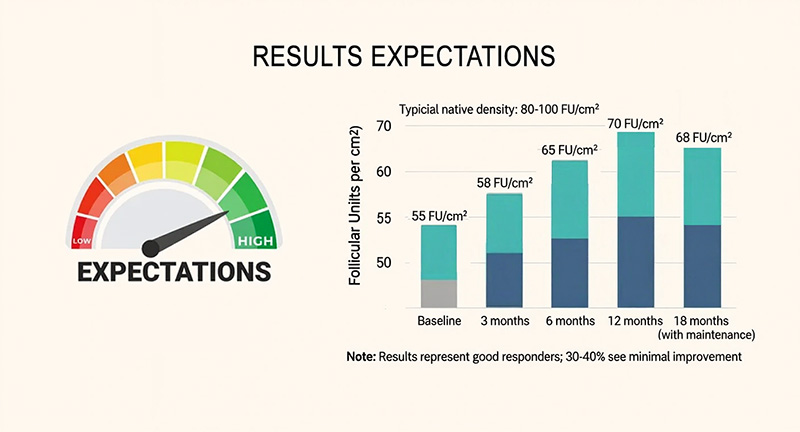
Most responders see stabilization of hair loss plus modest improvements in density and thickness.
A typical good responder might go from 55 follicular units/cm² to 68-72 follicular units/cm² over 12 months.
This represents noticeable improvement but not dramatic transformation from bald to full coverage.
Patients with advanced baldness (Norwood 5-7) generally see less benefit than those with early thinning (Norwood 2-3).
The treatment works best as a preventive or early intervention strategy, not a reversal of severe baldness.
Comparison to Surgical Hair Restoration
Hair transplant surgery provides permanent, predictable results but requires sufficient donor hair and carries surgical risks.
Stem cell therapy offers a non-surgical option but requires ongoing maintenance and produces more subtle improvements.
Many patients benefit from combination approaches: transplant for density in key areas, stem cells for overall scalp health and prevention.
Neither approach is objectively “better”; they serve different patient needs and goals.
Frequently Asked Questions
How is this different from PRP treatments?
Standard PRP uses platelet-derived growth factors from your blood. Our follicular stem cell therapy extracts actual stem cells from hair follicles in your donor area, then combines them with PRP. The stem cells themselves can potentially differentiate and support hair growth in ways platelets cannot. Early data suggests better results, but the difference may not justify the added cost for everyone.
Is this the same as the stem cell treatments advertised online?
No. Many clinics advertise “stem cell” treatments using adipose (fat) tissue or bone marrow. We specifically use follicular stem cells from the scalp bulge region. The source matters because different stem cell types have different capabilities. Be skeptical of claims about stem cell treatments; ask specifically where the cells come from and request published data.
Will this regrow hair in completely bald areas?
Unlikely. This treatment appears to thicken existing miniaturized hairs and potentially slow further loss. It’s not effective at regrowing hair in areas that have been bald for years where follicles are completely dormant or dead. Think of it as fertilizer for a thinning lawn, not a method to grow grass on concrete.
How many treatments will I need?
Most patients receive 3-4 initial sessions spaced 4-6 weeks apart, then maintenance sessions every 6-12 months. Response varies by individual. Some see benefits after 2 sessions; others need the full series. We typically recommend committing to at least 3 sessions before judging results.
Does insurance cover this?
No. Stem cell therapy for hair loss is considered cosmetic and investigational, so insurance doesn’t cover it. You’ll pay out-of-pocket. Some practices offer financing options.
Are the results permanent?
No. Without maintenance treatments, improvements gradually decline over 12-24 months as the hair growth cycle continues and miniaturization resumes. This is a chronic intervention, not a one-time cure. Budget for ongoing costs if you pursue this route.
About the Research Collaboration
This article documents early-stage research conducted jointly by ForHair Clinic (Atlanta, USA) and Artemisia Lab (Rome, Italy) between 2016-2018.
Dr. Chiara Insalaco served as lead researcher during her PhD work at University Tor Vergata in Rome.
Dr. John P. Cole provided clinical oversight and patient access at ForHair’s Atlanta facility.
The collaboration aimed to establish proof-of-concept for follicular-derived stem cell therapy as an alternative to adipose-derived approaches.
Findings informed ForHair’s current clinical protocols but remain unpublished in peer-reviewed literature.
Patients considering stem cell therapy should understand this represents evolving science, not an established standard of care.
Medical Disclaimer
This article describes investigational research and early-stage clinical experience with follicular stem cell therapy for hair loss.
The treatments discussed are not FDA-approved specifically for hair restoration and should be considered experimental.
Individual results vary significantly based on patient factors, including age, extent of hair loss, underlying causes, and genetic predisposition.
Stem cell therapy outcomes described represent preliminary observations from a limited patient population without long-term follow-up data.
Patients considering stem cell treatments should undergo thorough consultation with a qualified hair restoration physician to discuss realistic expectations, costs, and alternative options.
The comparison between stem cell therapy and standard hair transplant surgery reflects general observations and may not apply to individual circumstances.
Original Source Attribution
This article is a translated interview originally published in Italian by La Stampa magazine, January 15, 2018.
Original Italian article: “Così combattiamo la calvizie con le staminali”
Translation provided for educational purposes with attribution to original publication.
Related Reading
For more information on ForHair’s current stem cell and regenerative medicine offerings, see:
Stem Cell Treatments for Hair Restoration
Cytokine Rich Plasma (CRP) Therapy